2026-10-17 ·
How Winter Rains Trigger Attic Mold in Sunland Homes
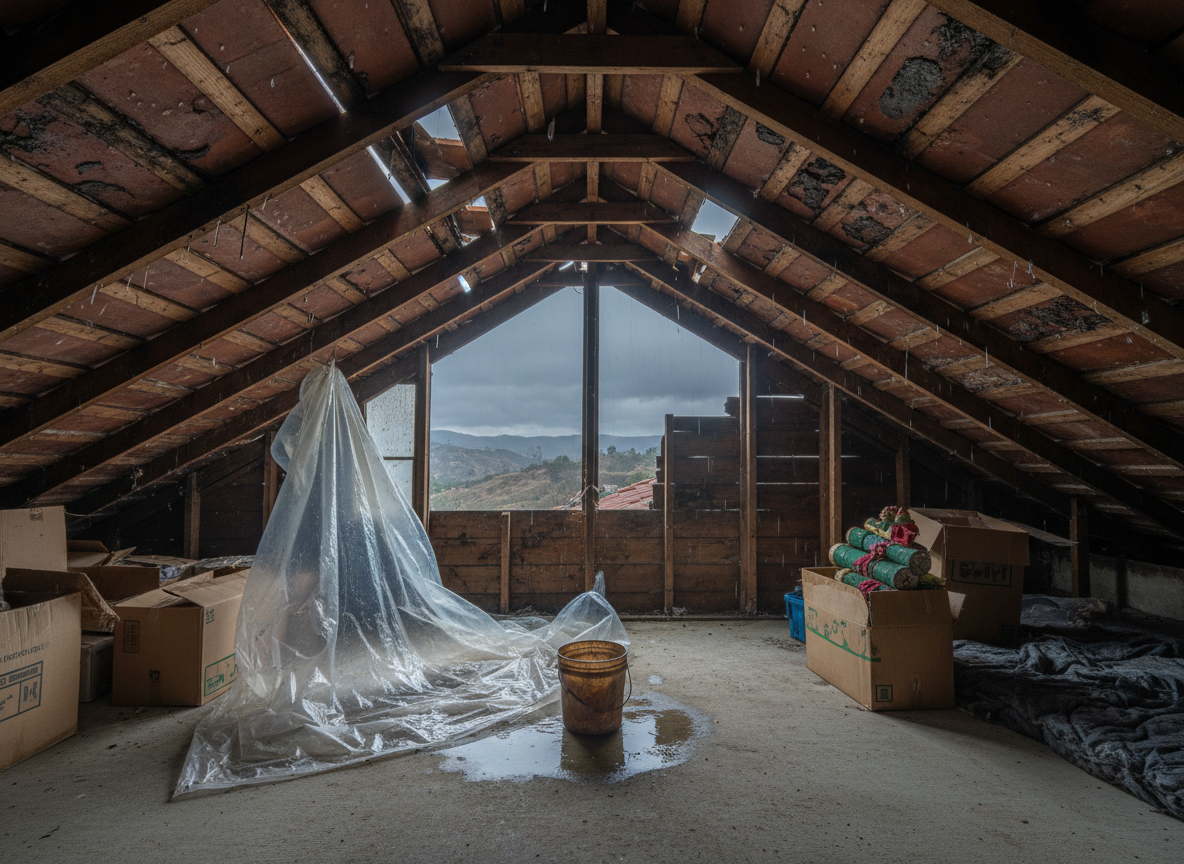
Winter rains trigger attic mold in Sunland homes when moisture from storms enters through small roof gaps that develop during the preceding hot dry summers, especially in 1950s-1970s housing stock common in Sunland Village and Foothill Trails. These leaks often stay hidden until the first sustained rains hit in December or January, giving spores the water they need on wood sheathing and insulation.
Roof Construction Issues Common in Sunland
Many homes in Sunland Village and along Foothill Trails have older asphalt shingle roofs or composite materials installed 20-30 years ago that crack under the temperature swings of Los Angeles County's Mediterranean climate. Hot dry summers bake the shingles, creating micro-fractures that expand when winter rains arrive. Homeowners near Sunland Park often report leaks around chimneys and vents where flashing has shifted over time. These entry points allow water to pool on attic rafters rather than run off, creating the exact humidity levels mold needs to colonize within days of a storm.
How Terrain and Nearby Forests Influence Moisture
Proximity to Angeles National Forest trailheads means Sunland properties sit in foothill zones where cool air from higher elevations mixes with warmer valley air during winter storms. This creates condensation on attic surfaces even when rain does not directly penetrate. Properties bordering Tujunga and Sylmar experience similar patterns because the shared topography funnels moisture into low spots on roofs. The dry summers leave dust and debris on shingles that then trap water during the first rains, extending drying times inside the attic space.
Timeline from Rain to Visible Mold Growth
Mold colonies typically appear 7-14 days after sustained winter rainfall reaches 1-2 inches in a 48-hour period. In Sunland homes with poor attic ventilation, relative humidity stays above 60 percent long enough for spores to germinate on cellulose insulation. Residents in Foothill Trails notice musty odors first when accessing storage areas after storms. Without prompt inspection, the growth spreads along rafters within three weeks, especially when mild winter temperatures keep conditions favorable rather than freezing the moisture.
Practical Steps After Winter Storms
Check attics within 48 hours of heavy rain for wet spots on sheathing or darkened insulation near roof peaks. Homeowners in Sunland Village should focus on areas above bathrooms and kitchens where plumbing vents create extra roof penetrations. If discoloration appears, professional assessment prevents spores from circulating through HVAC systems during the next heating cycle. Attic Mold Testing and Removal identifies the exact moisture source and extent before remediation begins.
Local Cost Factors Tied to Sunland Conditions
Remediation pricing in Sunland reflects the extra labor required to access steep foothill roofs and the need for containment in older homes with limited attic access points. Factors such as insulation type and proximity to neighboring properties in Sylmar influence project scope. What Affects Mold Remediation Cost in Sunland California outlines how roof pitch and prior water events change the work required after winter rains.