Sunland sits in the foothills of Los Angeles County where Mediterranean summers bake stucco and wood-frame homes built from the 1950s onward, then mild winters bring enough rain to drive moisture under eaves and into crawlspaces common in Sunland Village and Foothill Trails. Affordable mold remediation here starts with mapping how water travels along the sloped lots that back up to Angeles National Forest trailheads rather than assuming uniform wall cavities like flatland jobs in Sylmar or Tujunga. Crews often open only the minimal drywall needed because full demolition quickly exceeds budget on these compact ranch houses.
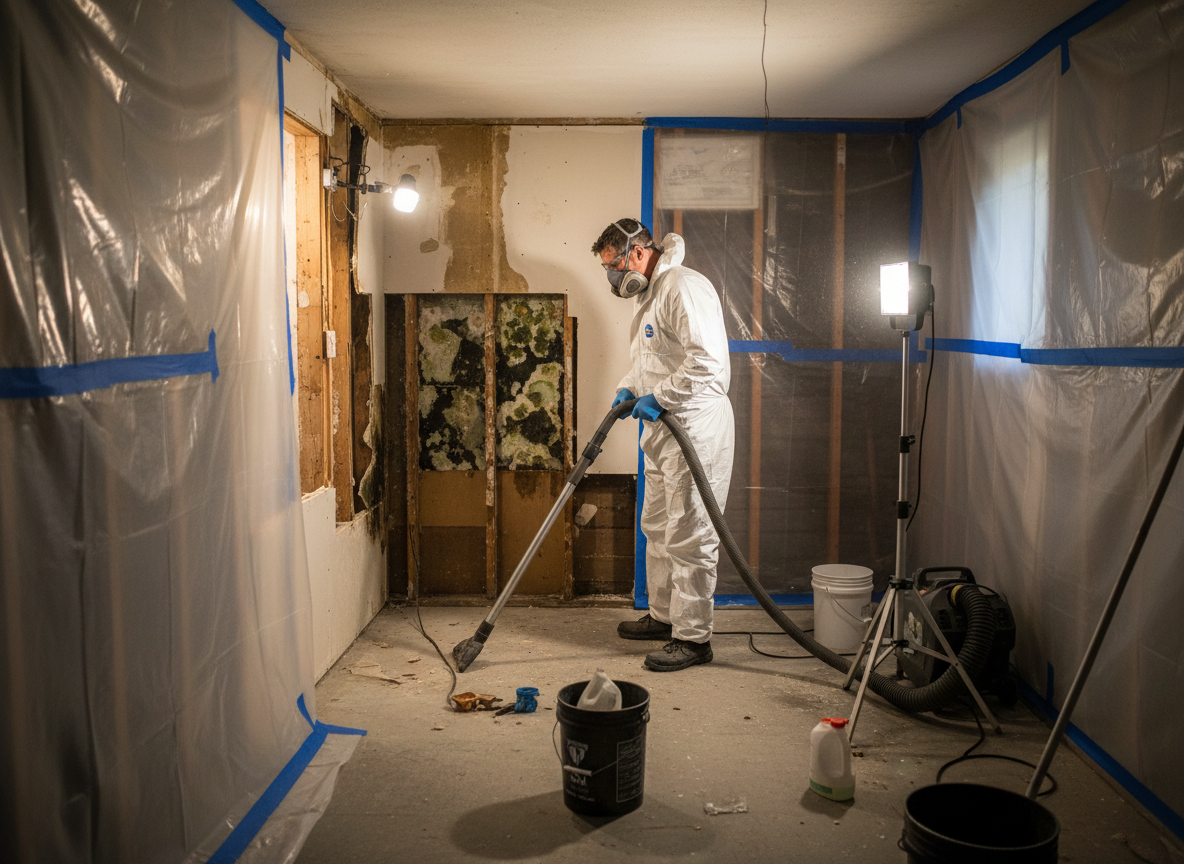
Dry summers mean hidden mold can stay dormant for months until a winter storm or sprinkler overspray reactivates it, especially where original clay tile roofs meet stucco without modern flashing. The work therefore includes checking attic ventilation and grading around the foundation before any removal begins. Containment uses negative air machines sized for the smaller square footage typical of these neighborhoods so residents in adjacent rooms can stay in the house during the project.
Los Angeles County rules require proper disposal of affected materials at approved sites, which adds a line item many low-cost quotes skip. We separate salvageable insulation from porous wood that must be discarded, then apply antimicrobial rinses only where the substrate can be sealed afterward. This keeps the final bill lower while meeting code on every Sunland job.
Seasonal Moisture Patterns
Mild winter rains combined with poor hillside drainage create repeat mold cycles in Foothill Trails homes that cheaper surface sprays never solve. Checking sprinkler timing and roof valleys before remediation prevents the same growth from returning the next season.
Technician insight
In Sunland, the thing that catches most people out with affordable mold remediation is how winter rain funnels along the natural slopes behind Foothill Trails homes and pools against older stucco foundations that lack modern waterproofing, letting mold travel up base plates before anyone smells it.
Crawlspace Growth After Winter Rain
A Sunland Village homeowner called after noticing a musty odor following a January storm. Inspection showed water had entered the crawlspace from the sloped yard backing onto Angeles National Forest land. We isolated the area, removed the damp insulation, treated the joists, and improved drainage grading to stop recurrence.
How it works
- 1
On-Site Assessment
Walk every accessible area including crawlspaces and attics common in Sunland Village homes to locate moisture sources tied to local terrain.
- 2
Containment Setup
Isolate affected zones with plastic barriers and negative air to protect the rest of the house during work in compact foothill properties.
- 3
Material Removal
Cut out and bag only the porous sections showing growth, then clean non-porous surfaces before disposal at county-approved sites.
- 4
Drying and Verification
Run dehumidifiers sized for the home, then test surfaces to confirm levels are safe before any reconstruction.
Pricing
Upfront quotes after inspection; price moves with square footage, access to hillside crawlspaces, and whether hidden growth requires extra drywall removal in older Sunland Village homes.