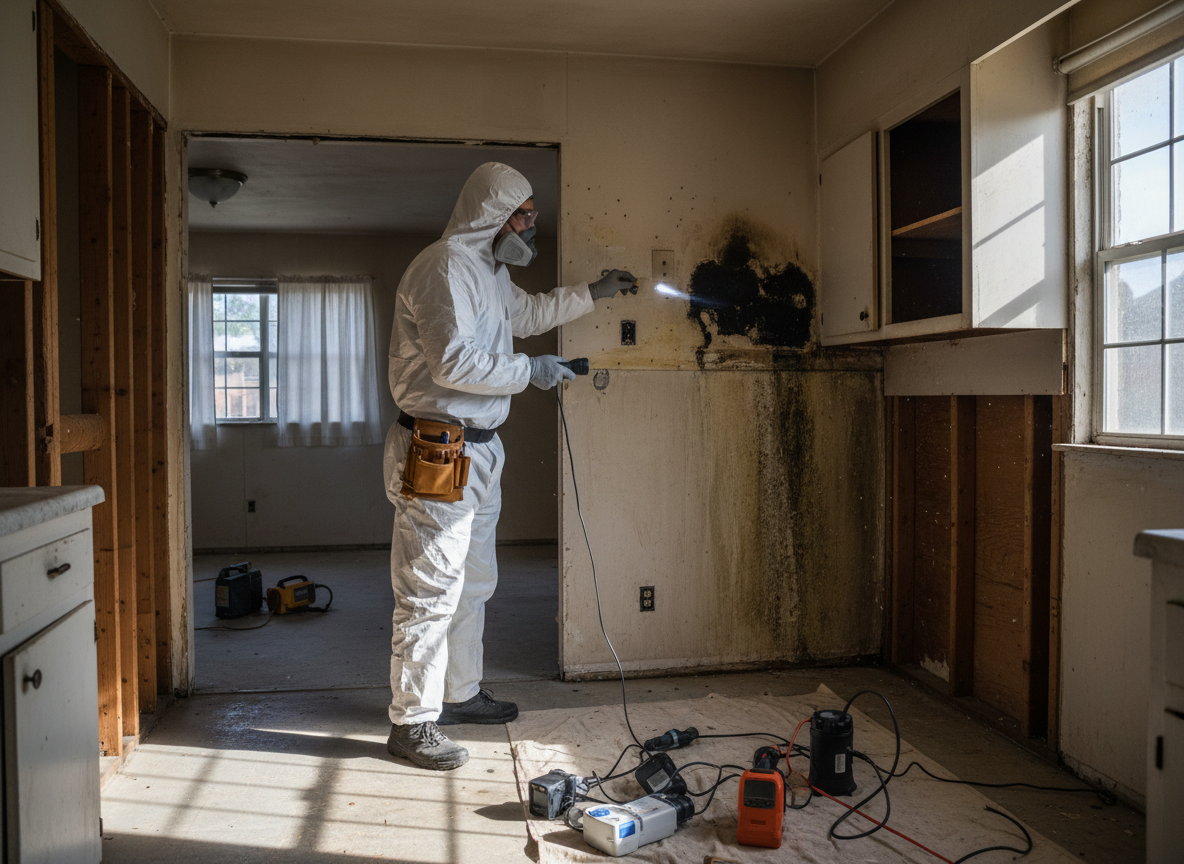
Sunland homes built from the 1940s through 1970s in Sunland Village and Foothill Trails often feature stucco exteriors over wood framing with limited crawlspace ventilation. Winter rains followed by months of dry heat create hidden moisture pockets behind walls and in attics where roof leaks from wind-driven rain go unnoticed until musty odors appear. A proper inspection uses moisture meters and borescopes in these older structures because surface sampling alone misses growth in insulation and subflooring common to Los Angeles County hillside properties.
Nearby Tujunga and Sylmar share similar canyon topography that funnels runoff toward foundations during rare but intense storms. Inspectors must check exterior grading around homes near Sunland Park because even small slope changes direct water under slabs. Air sampling protocols differ here from flatland neighborhoods since afternoon Santa Ana winds can spread spores through open ridge vents typical in Sunland construction.
Los Angeles County building codes require documentation of moisture sources before any remediation plan moves forward. Homeowners along Angeles National Forest trailheads frequently encounter mold in detached garages converted to living space where original slab plumbing lacks modern vapor barriers. Skipping thermal imaging during inspection often leaves elevated humidity in these additions undetected until the next mild winter.
Terrain and Seasonal Moisture Factors
Foothill properties experience faster drying on south-facing slopes yet retain moisture on north sides shaded by the San Gabriel Mountains. This microclimate difference means inspection routes must prioritize north-side exterior walls and lower-level bedrooms after any measurable rainfall.
Technician insight
In Sunland, the thing that catches most people out with Mold inspection near me is how quickly attic mold dries out after winter rains but leaves spores in the insulation of 1950s Foothill Trails homes that only show up on air samples taken during the dry season.
Musty Odor After Winter Rains
A Sunland Village homeowner reported a persistent smell in a converted garage bedroom following heavy January rains. Inspection revealed elevated moisture in the slab edge near the north foundation wall due to altered grading from neighboring property runoff. Thermal imaging and moisture mapping confirmed the source without wall demolition. The report outlined targeted remediation steps focused on exterior drainage correction.
How it works
- 1
Initial Phone Assessment
Gather details on home age, recent leaks, and odor locations while scheduling a 24/7 visit from the Foothill Blvd base.
- 2
On-Site Visual Walkthrough
Examine attics, crawlspaces, and exterior grading around Sunland Village and Foothill Trails properties for water entry points.
- 3
Moisture and Thermal Mapping
Use meters and infrared to locate hidden damp areas behind stucco and in subflooring typical of mid-century Los Angeles County homes.
- 4
Sampling and Documentation
Collect air and surface samples where needed and prepare a written report noting all findings and recommended next steps.
Pricing
Pricing varies by square footage, number of stories, and access difficulty on hillside lots; upfront quotes provided before work begins.