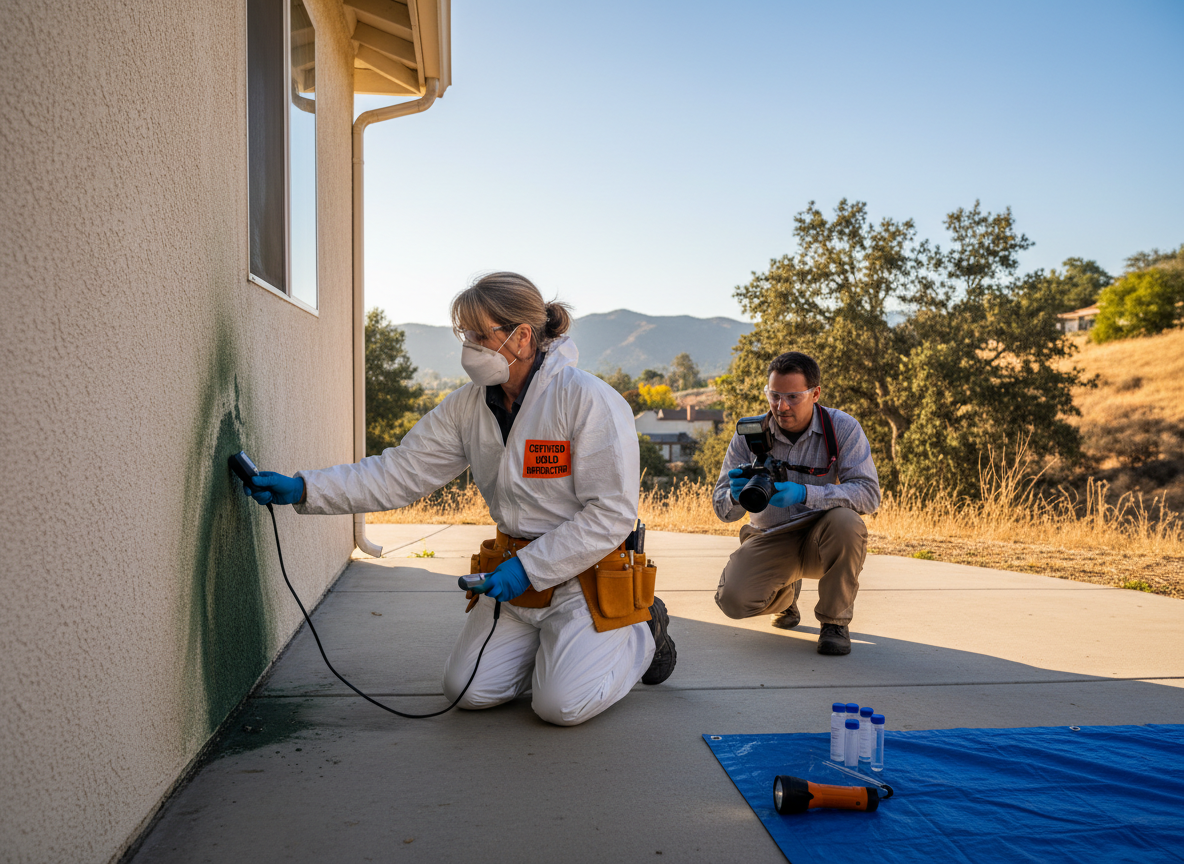
Sunland sits in a Mediterranean climate with hot dry summers that drive heavy air conditioning use and mild winters that still bring enough rain to stress older roofs and foundations. Homes in Sunland Village and Foothill Trails often date to the mid-century build-out, featuring crawlspaces, unconditioned attics, and limited ventilation that trap moisture when humidity spikes after a storm or when condensate lines drip unnoticed. A certified mold inspector must map these hidden paths, checking where Angeles National Forest trailheads meet residential edges and where runoff from the foothills meets slab edges in Sylmar and Tujunga border properties.
Inspection work here routinely involves pulling back insulation in knee walls near the forest interface, testing HVAC plenums that run through low-slope roofs, and checking bathrooms added during the 1970s and 1980s remodels common throughout the area. Los Angeles County building practices from those decades left many structures with single-pane windows and minimal vapor barriers, so inspectors look for condensation lines at window sills and behind vanities before any remediation plan is written. Access is often tight because many lots back up against steep terrain, requiring equipment that fits through narrow side yards without disturbing established landscaping.
The job changes with the season. Summer inspections focus on AC-related moisture and dust buildup that feeds mold on coils and in ducts, while winter calls require checking for roof leaks around the shallow eaves typical of Sunland Village tract homes. Proximity to the national forest also means inspectors note any signs of wildlife entry points that can carry moisture deeper into wall cavities. Every report includes clear access notes so homeowners in Foothill Trails can see exactly which areas need follow-up without unnecessary demolition.
Technician insight
In Sunland, the thing that catches most people out with certified mold inspector is how the foothills trap humidity in the shallow crawlspaces of 1950s and 1960s homes in Sunland Village after even light winter rains, especially when the lot slopes toward the house from the Angeles National Forest side.
Crawlspace Odor After Winter Rain
A homeowner in Foothill Trails reported a musty smell following mild winter rains. Inspection revealed moisture wicking up from the soil edge where the lot meets the national forest boundary into the crawlspace of a 1962 home. Sampling confirmed mold growth on insulation and rim joists. The report outlined targeted removal and ventilation upgrades without opening finished floors.
How it works
- 1
Site Walk and History Review
Walk the property inside and out, noting construction details, past water events, and HVAC layout specific to Sunland homes.
- 2
Moisture Mapping
Use meters to check walls, floors, and ceilings in crawlspaces, attics, and living areas, focusing on older stock in Sunland Village and Foothill Trails.
- 3
Air and Surface Sampling
Collect samples from suspect areas and compare to outdoor baselines near Angeles National Forest trailheads.
- 4
Findings Report and Recommendations
Deliver a written report with photos, moisture readings, and next-step guidance based on local building conditions.
Pricing
Pricing varies by property size, access difficulty, and number of samples required in older Sunland homes.