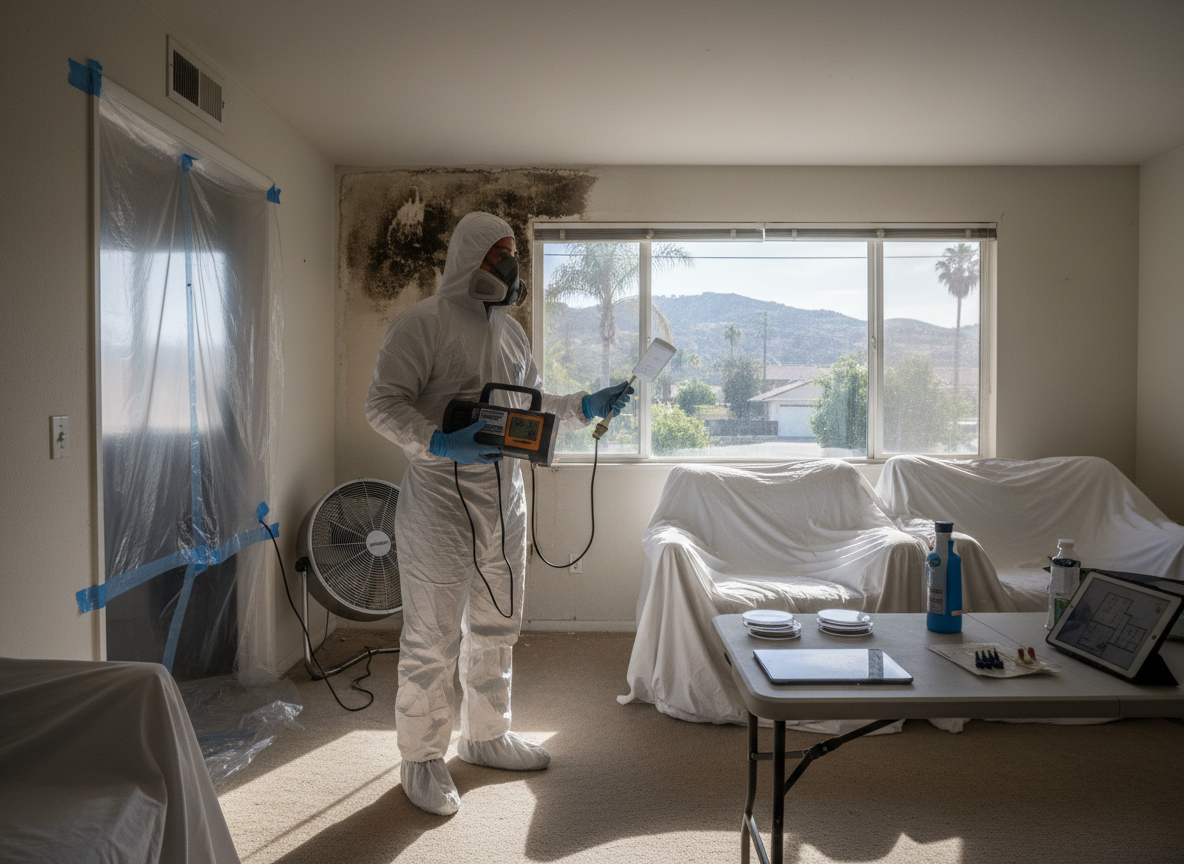
Sunland homes built before the 1970s in Sunland Village and Foothill Trails often feature stucco exteriors and crawl spaces that trap moisture during the mild winters. Hot dry summers mask leaks until the first rains push water through rooflines near Angeles National Forest trailheads. Air sampling with spore traps and moisture meters identifies hidden colonies in attics and wall cavities where Tujunga and Sylmar crosswinds carry additional particulates. Testing protocols follow Los Angeles County guidelines for residential structures without assuming any certification status.
Edge cases appear when residents in Foothill Trails report allergy symptoms after recent rains while summer dryness keeps visible signs absent. Surface tape lifts combined with indoor-outdoor air comparisons reveal whether mold originates from local soil conditions or HVAC condensation. Older ductwork common in Sunland Village can distribute spores even when the source sits outside the living space. Results guide targeted remediation rather than whole-house treatments that ignore the actual moisture path.
Testing also accounts for the transition zones between Angeles National Forest and residential streets where seasonal temperature swings increase condensation on cooler surfaces. Homeowners in Sylmar-adjacent pockets sometimes confuse pollen loads with mold growth after windy days. Detailed reports include room-by-room readings and recommendations for ventilation adjustments suited to the area's typical construction.
Technician insight
In Sunland the thing that catches most people out with air quality and mold testing is how the dry summer months let small roof leaks near Foothill Trails go unnoticed until winter rains hit the older stucco homes in Sunland Village, pushing moisture deep into wall cavities where standard visual checks miss it.
Hidden Attic Moisture After Winter Rains
A Foothill Trails homeowner noticed musty odors only after the first heavy rain. Testing located elevated spores in the attic tied to a slow leak along the north slope facing Angeles National Forest. We isolated the source, confirmed no spread into living areas, and provided a targeted remediation plan that avoided unnecessary demolition.
How it works
- 1
Initial Intake
Gather details on property age, recent leaks, and symptoms reported in Sunland Village or Foothill Trails.
- 2
On-Site Assessment
Deploy spore traps, moisture meters, and thermal imaging across living spaces, attics, and crawl areas.
- 3
Sample Analysis
Send samples to an independent lab for species identification and concentration levels.
- 4
Report Delivery
Provide written findings with location-specific notes and next-step options within 48 hours.
Pricing
Cost depends on square footage, number of samples, and access challenges in older Sunland homes; upfront quotes provided before work begins.