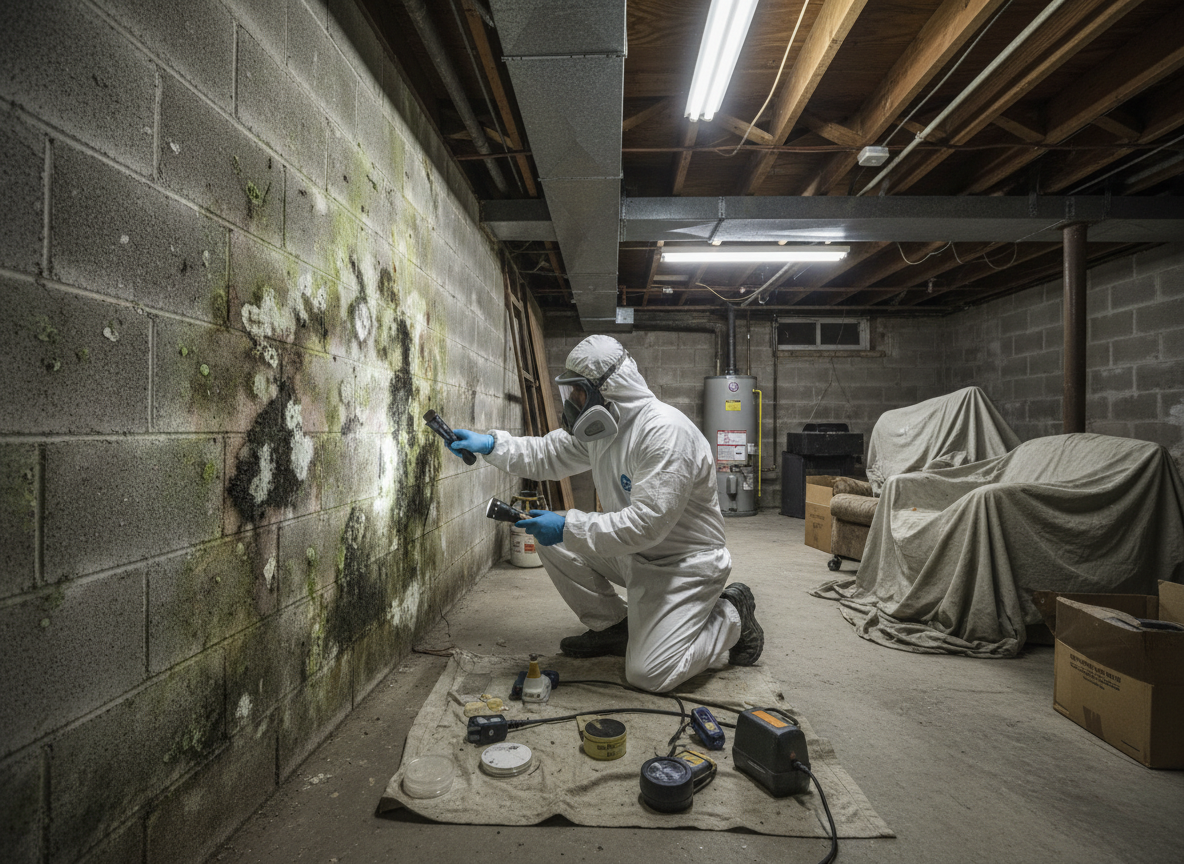
Sunland sits in the foothills of Los Angeles County where homes in Sunland Village and Foothill Trails often feature older concrete foundations or partial lower levels built before modern grading standards. These structures sit near Angeles National Forest trailheads, so winter rains can send sheet flow along driveways and into foundation walls even during mild seasons. A proper inspection starts with mapping exterior drainage before any interior work, because surface water entering at the sill plate is the most common hidden source here rather than simple humidity.
Inside, inspectors check behind finished walls and under stairs where airflow from hot dry summers keeps surface readings low while trapped moisture stays in framing or insulation. Thermal imaging and pin meters reveal temperature differentials along shared walls with garages or crawlspaces that open toward Sylmar or Tujunga. Edge cases include stucco-clad additions added decades ago that trap condensation when the original basement slab meets the newer footing, creating a cold joint that homeowners rarely notice until odors appear.
Los Angeles County building practices in these neighborhoods mean many basements lack vapor barriers or have been finished over original dirt floors. Sampling protocols focus on both air and surface because visible growth may be limited to one corner while spores travel through HVAC returns that serve upper floors. Reports include exact moisture content readings at multiple depths and photos tied to floor plans so remediation crews know which walls to open without unnecessary demolition.
Technician insight
In Sunland, the thing that catches most people out with Basement mold inspection is how winter runoff from the Angeles National Forest trailheads pools against older foundations in Sunland Village even after mild rains, then hides behind drywall through the long dry summers until it finally migrates upward.
Foothill Trails Lower Level Odor
A homeowner in Foothill Trails reported a musty smell after several winter storms. Inspection showed moisture entering at the foundation wall where grading sloped toward the house from nearby Angeles National Forest terrain. Thermal scans and meter readings confirmed damp framing behind finished panels. The report mapped exact locations so remediation could focus on the affected sections without opening unaffected walls.
How it works
- 1
Exterior Drainage Review
Walk the property perimeter in Sunland Village or Foothill Trails to check grading, downspouts, and any slopes from Angeles National Forest runoff that direct water toward the foundation.
- 2
Interior Moisture Mapping
Use meters and imaging on all lower-level walls, floors, and shared surfaces to locate hidden damp zones created by mild winter rains and older construction details.
- 3
Targeted Sampling
Collect air and surface samples only from confirmed moisture areas, then document findings with photos and readings tied to the home's layout.
- 4
Report and Recommendations
Deliver a written summary with exact locations, moisture levels, and next-step options that account for the home's age and proximity to nearby neighborhoods like Tujunga.
Pricing
Upfront quotes based on square footage, access difficulty, and number of lower-level rooms; no hidden fees.