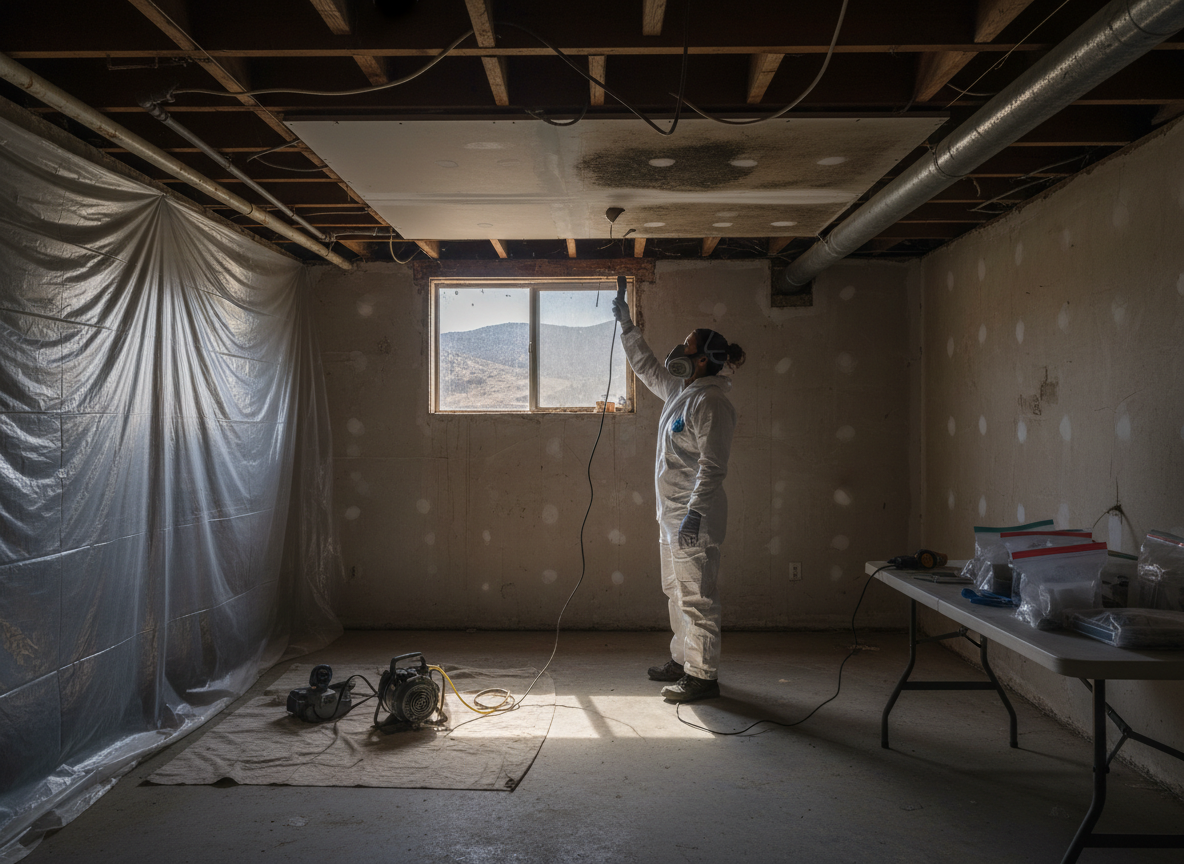
Sunland homes in Sunland Village and Foothill Trails often feature older construction with crawl spaces and attics that trap moisture during the mild winters. Hot dry summers can mask ongoing leaks until visible growth appears on drywall or insulation. An inspection starts with moisture mapping using meters on walls, floors, and ceilings, followed by air and surface sampling in high-risk zones like bathrooms and laundry rooms near Sylmar and Tujunga boundaries.
Edge cases include hidden growth behind stucco exteriors or in HVAC ducts where condensation forms after rare winter rains. Los Angeles County building codes require proper ventilation in crawl spaces, yet many Sunland properties built before modern standards fall short. Inspectors check for water intrusion points around windows and rooflines, especially on slopes facing the Angeles National Forest where runoff can pool against foundations.
Homeowners in these neighborhoods frequently overlook mold in detached garages or under decks where soil remains damp year-round. Sampling protocols distinguish between common outdoor spores carried in from nearby trailheads and indoor amplification. Reports detail affected materials such as drywall, carpet padding, or wood framing with clear next-step recommendations.
Seasonal Guidance
Mild winters bring enough rain to saturate older roofs and foundations in Sunland Village, while summer heat drives residents to close homes tightly, trapping indoor humidity. Inspections timed after the first winter storms catch issues before they spread through Foothill Trails properties.
Technician insight
In Sunland, the thing that catches most people out with Home mold inspection is moisture trapped under older homes in Foothill Trails where the slope meets the Angeles National Forest edge. Winter rains soak the soil against foundations and the dry summers hide it until growth reaches living spaces. Checking crawl space vents and grading around the 8337 Foothill Blvd area properties prevents repeat calls.
Hidden Growth After Winter Rain
A Sunland Village homeowner noticed a musty smell in the hallway after mild winter rains. Inspection found elevated moisture in the crawl space where runoff from the nearby slope had pooled against the foundation. Air samples confirmed indoor amplification of spores. Containment and targeted drying resolved the issue before it reached the living areas.
How it works
- 1
Initial Assessment
Review property history and visible signs of moisture or odor in Sunland homes.
- 2
Moisture Mapping
Use meters to locate damp areas in crawl spaces, attics, and walls common to local housing stock.
- 3
Sampling
Collect air and surface samples from key rooms and HVAC systems.
- 4
Report Delivery
Provide written findings with photos and material-specific recommendations.
- 5
Follow-Up Options
Discuss remediation paths if growth is confirmed.
Pricing
Upfront quotes based on square footage, access difficulty, and number of samples required.