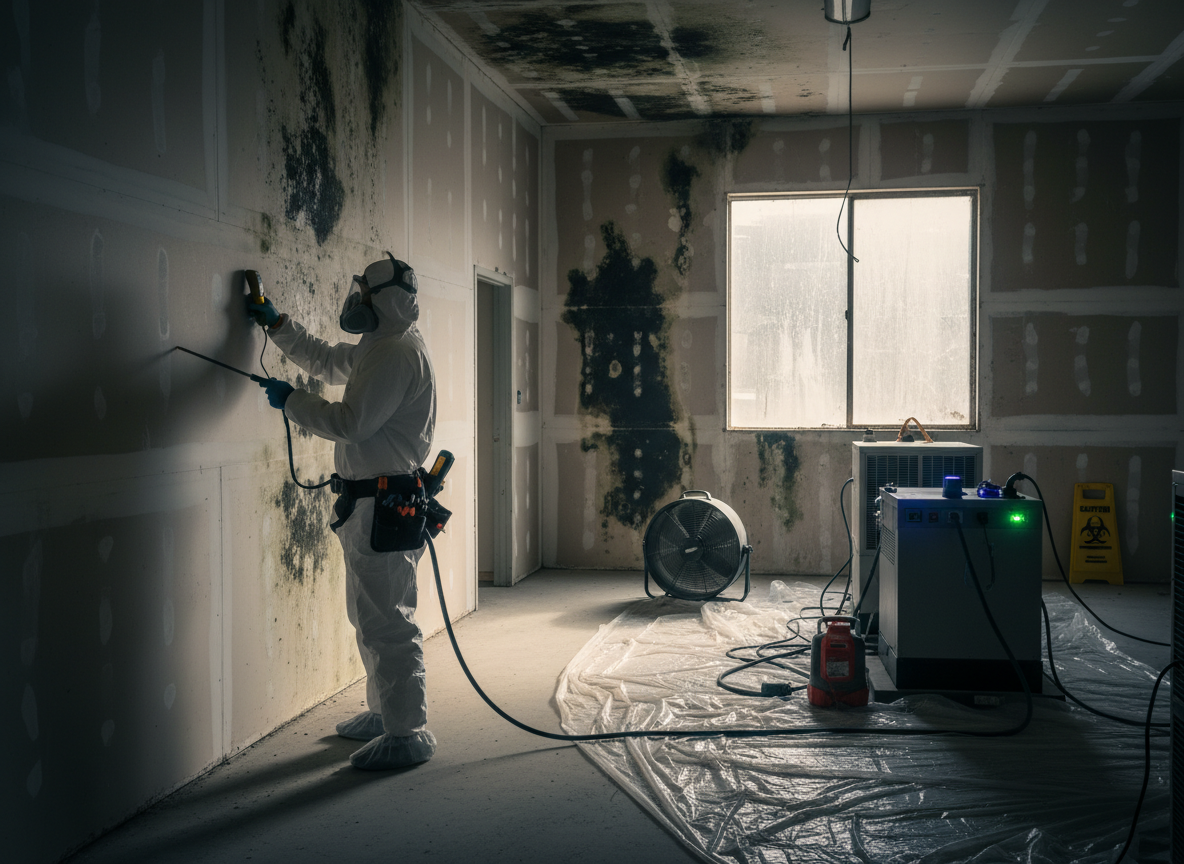
Commercial properties along Foothill Blvd and in Sunland Village often feature older construction with flat roofs and shared HVAC systems that trap moisture after the mild winter rains common in Los Angeles County. Inspectors must check crawl spaces, wall cavities, and ceiling plenums where the hot dry summers dry surface areas but leave hidden dampness near Angeles National Forest trailheads. Airflow patterns in these buildings differ from residential stock because of larger square footage and tenant modifications that block original ventilation.
Edge cases include retail spaces near Sunland Park where irrigation runoff from adjacent lots raises soil moisture against foundation walls, and warehouse buildings in Foothill Trails that experience condensation on metal siding during temperature swings. Sampling protocols account for the county's air quality rules and require documentation of spore types that thrive in the region's seasonal humidity shifts. Access limitations in multi-tenant structures frequently require coordination with property managers to avoid disrupting business operations during testing.
Reports must note any code-related concerns such as missing vapor barriers or improper grading that are common in structures built before current Los Angeles County standards. Recommendations distinguish between surface growth that can be addressed through cleaning and deeper substrate issues that demand demolition access. Follow-up verification testing confirms clearance levels before tenants reoccupy spaces.
Seasonal Moisture Patterns
Mild winters bring the majority of rainfall that infiltrates commercial roofs and window seals in Sunland, while summer heat drives evaporation that conceals ongoing problems until odors appear. Inspections scheduled after the first rains often reveal issues missed during dry months.
Technician insight
In Sunland, the thing that catches most people out with Commercial mold inspection is how the dry summers let moisture linger inside older commercial walls along Foothill Blvd until winter rains trigger sudden odor complaints from multiple tenants at once.
Retail Strip Near Sunland Park
A strip-center owner noticed recurring musty smells in two units after seasonal rains. Inspection located elevated moisture in the shared wall cavity from poor grading against the hillside lot. Air sampling confirmed aspergillus growth tied to the building's 1970s construction. The report outlined targeted removal zones and HVAC cleaning steps that resolved the issue without full closure.
How it works
- 1
Initial Site Walk
Review building plans and tenant history while walking all accessible commercial areas to note visible staining or odors.
- 2
Moisture and Humidity Mapping
Use meters and thermal imaging on walls, ceilings, and HVAC components to locate elevated readings tied to local weather patterns.
- 3
Targeted Sampling
Collect air and surface samples from suspect zones and control areas for laboratory analysis of mold types present.
- 4
Findings Report Delivery
Compile results with photos, lab data, and prioritized recommendations suited to the property's age and Sunland location.
Pricing
Quotes reflect building size, number of stories, and access complexity typical of commercial stock in Sunland Village and nearby foothill locations.