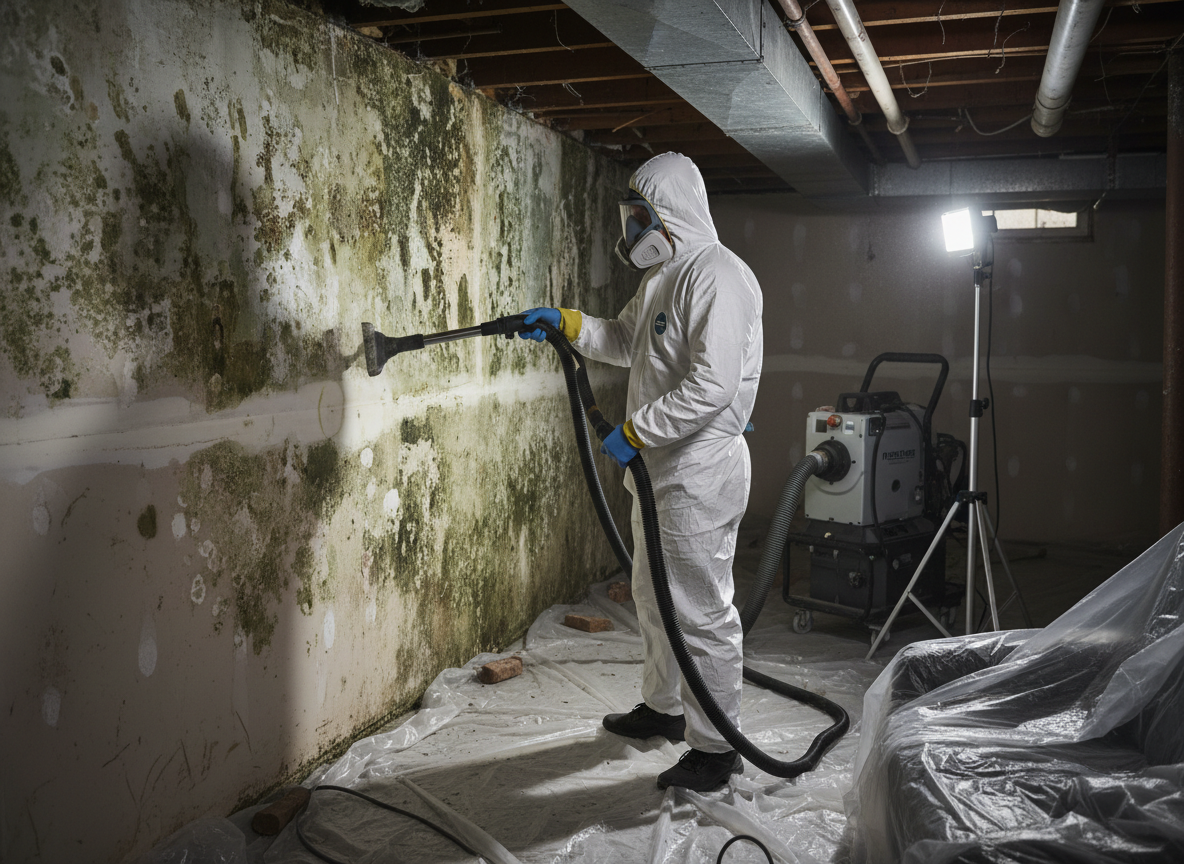
Sunland homes in Sunland Village and Foothill Trails often sit on hillsides with crawl spaces and older wood framing that trap moisture during the mild winters. Hot dry summers then create rapid drying cycles that push mold deeper into drywall and subfloors once leaks occur from aging plumbing or roof penetrations common in Los Angeles County construction. Abatement crews must account for limited access on narrow streets and the need to protect nearby Angeles National Forest trailheads from spore release during removal.
Mediterranean climate patterns mean most mold issues surface after the first winter rains soak into stucco exteriors and foundation cracks in Sylmar-adjacent properties. Abatement work here frequently involves negative air machines and HEPA filtration to prevent cross-contamination into attached garages or attics where insulation has already absorbed water. Crews also check for hidden growth behind kitchen cabinets in Tujunga border homes where shared walls allow moisture migration between units.
Proper containment starts with sealing HVAC returns that serve multiple Foothill Trails residences to avoid spreading spores through shared ductwork. Removal includes cutting out affected drywall while preserving structural beams that may have been treated with older preservatives. Final clearance testing focuses on air samples from living spaces and crawl spaces, ensuring levels return to normal before reassembly begins.
Technician insight
In Sunland, the thing that catches most people out with mold abatement is how quickly dry summer air hides active growth in crawl spaces under Foothill Trails homes until the next rain hits. Homeowners often seal up visible spots without addressing the soil moisture that travels up the slope from Sunland Park drainage paths, so the job restarts every winter.
Crawl Space Growth After Winter Rain
A Sunland Village homeowner noticed musty odors in the living room after heavy rains. Inspection revealed water tracking from the hillside into the crawl space under the 1960s foundation, feeding mold on joists and insulation. Crews installed containment, removed saturated materials, dried the space, and added vapor barrier to block future soil moisture.
How it works
- 1
Site Assessment
Technicians inspect affected rooms, crawl spaces, and attics in Sunland Village homes to map moisture sources and hidden growth.
- 2
Containment Setup
Plastic barriers and negative air pressure isolate the work zone to protect adjacent living areas and nearby properties.
- 3
Material Removal
Contaminated drywall, insulation, and trim are cut out and bagged for disposal following Los Angeles County guidelines.
- 4
Drying and Treatment
Dehumidifiers and antimicrobial applications address remaining surfaces before reconstruction.
- 5
Clearance Testing
Air and surface samples confirm mold levels meet safe standards before barriers come down.
Pricing
Cost depends on square footage affected, access difficulty in hillside homes, and whether HVAC cleaning is required.