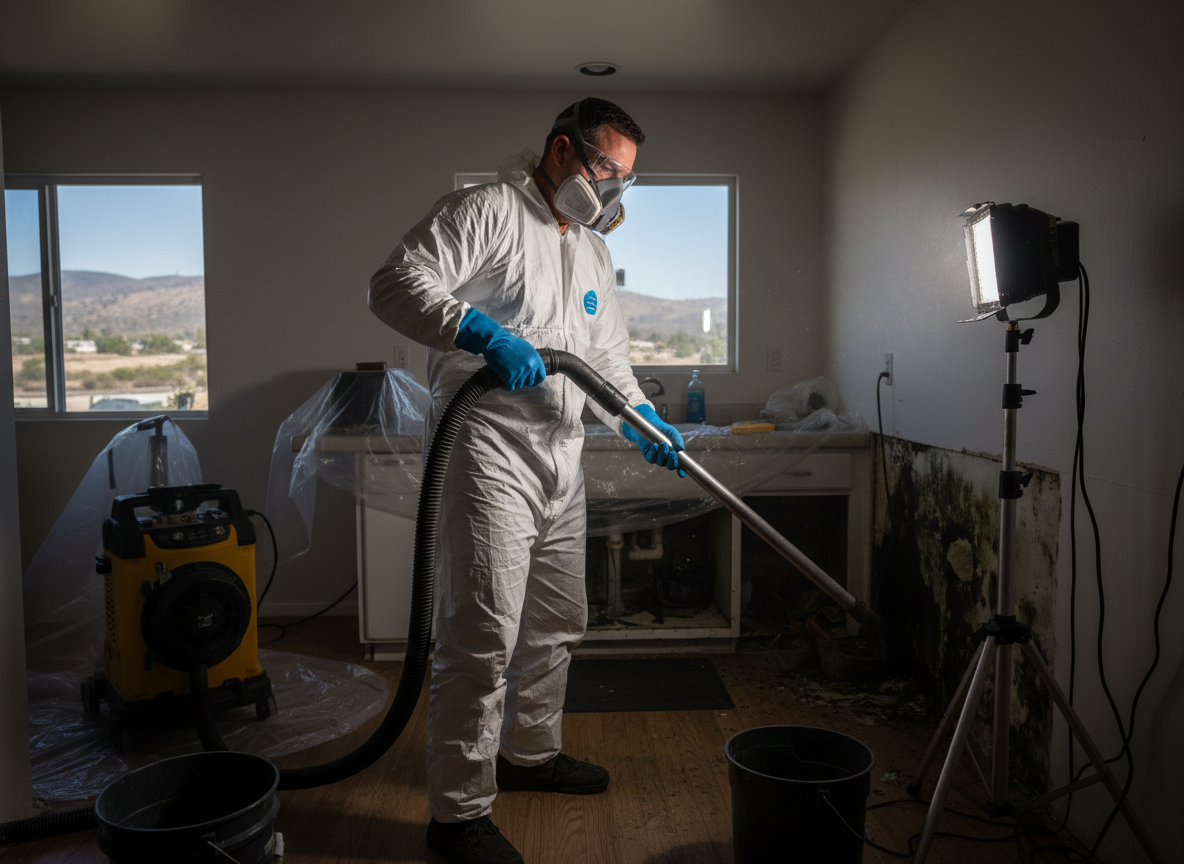
Sunland sits in the foothills of Los Angeles County where Mediterranean climate brings hot dry summers and occasional winter rains that pool against older foundations. Homes in Sunland Village and Foothill Trails often date to the 1950s through 1970s with crawl spaces and stucco exteriors that trap moisture after even modest storms. When residents search for mold cleanup near me they usually find hidden growth behind baseboards or in attics where roof leaks meet poor ventilation. Our crews start with moisture mapping using thermal imaging to locate pockets before any demolition begins.
Cleanup in this terrain requires extra care because Angeles National Forest trailheads nearby mean higher wind-driven rain events that push water under siding on sloped lots. We remove affected drywall and insulation in sections, bag materials on site, and run negative air machines to keep spores from migrating into living spaces. After source removal we apply EPA-registered antimicrobials only to remaining structural wood and let surfaces dry to under 15 percent moisture content before any new materials go in. Homeowners in Sylmar and Tujunga often call after noticing musty odors near HVAC returns that pull air from damp crawl spaces.
Edge cases include stucco-clad homes where water enters at window corners and travels laterally along sheathing, creating mold lines that standard visual checks miss. We always test for hidden moisture in adjacent rooms because the same winter rains that affect Sunland Park also saturate soil against retaining walls common on Foothill Trails properties. Final clearance involves both visual inspection and moisture meter readings plus optional air sampling if the homeowner requests documentation for insurance or real estate transactions.
Technician insight
In Sunland the thing that catches most people out with mold cleanup near me is winter rain soaking the base of stucco walls on sloped lots in Foothill Trails. Homeowners treat the musty smell in the living room but miss how water travels laterally along the sheathing from the uphill side, so the job always expands once we open the first wall.
Crawl Space Growth After Winter Rains
A Sunland Village homeowner noticed a musty odor near the hallway vent after several mild winter storms. Inspection found standing water in the crawl space under the 1960s slab addition where the lot slopes toward the rear foundation. We removed saturated insulation, treated joists, installed a vapor barrier over the soil, and ran drying equipment for three days until readings stabilized. Odor cleared and no recurrence reported after the next rain cycle.
How it works
- 1
Initial Inspection
Technician arrives within hours, uses moisture meters and thermal cameras to map affected areas in crawl spaces, attics, and wall cavities.
- 2
Containment Setup
Plastic barriers and negative air machines isolate the work zone so spores do not spread to clean areas of the home.
- 3
Removal and Cleaning
Remove and bag porous materials, wipe non-porous surfaces, and treat wood framing with antimicrobial solution.
- 4
Drying and Verification
Industrial dehumidifiers and air movers run until moisture levels drop below 15 percent, followed by post-remediation inspection.
Pricing
Upfront quotes after inspection because extent of hidden growth behind walls and in crawl spaces varies widely by property age and recent rain exposure.