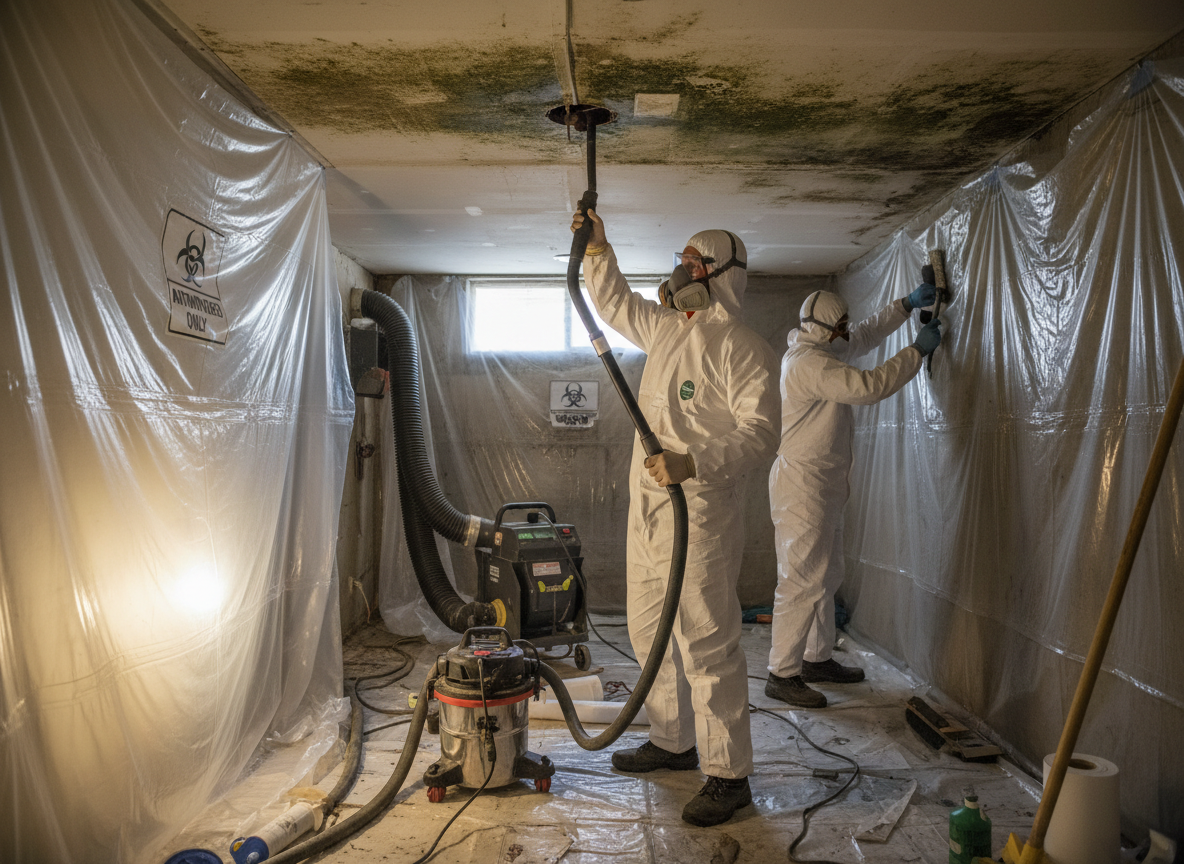
Sunland's Mediterranean climate brings hot dry summers that can mask moisture problems until winter rains arrive, allowing mold to establish in attics and crawlspaces of homes built before modern vapor barriers became standard. Properties near Angeles National Forest trailheads often experience runoff from the foothills that seeps into foundations, especially in Sunland Village where many houses sit on sloped lots with limited drainage. Technicians must account for stucco exteriors that hide leaks until interior finishes show discoloration or odors.
In Foothill Trails and adjacent neighborhoods bordering Tujunga and Sylmar, post-war housing stock frequently features unventilated spaces and older roofing that collects condensation during mild winter nights. Remediation requires isolating HVAC systems to prevent spore spread through shared ducts common in these tract homes. Materials like drywall and insulation in these structures absorb moisture differently than newer builds, demanding targeted removal rather than surface cleaning alone.
Los Angeles County building practices in the area emphasize seismic retrofits that can inadvertently create new moisture traps when walls are opened. Remediation crews check for hidden growth behind these modifications and along plumbing runs that run through hillside lots. Without proper negative air pressure and HEPA filtration, spores from Angeles National Forest-adjacent properties can migrate to unaffected rooms during removal.
Technician insight
In Sunland, the thing that catches most people out with professional mold removal is how mild winter moisture from the Angeles National Forest foothills seeps into the unvented crawlspaces of pre-1970s homes in Sunland Village, then stays trapped until summer heat pushes it into living areas.
Crawlspace Mold After Winter Rains
A Foothill Trails homeowner reported a persistent musty odor following seasonal rains. Inspection revealed mold growth on insulation and joists from hillside runoff entering the crawlspace. Crews contained the area, removed affected materials, treated surfaces, and added ventilation. The home passed clearance testing with no recurrence reported.
How it works
- 1
Initial Assessment
Inspect Sunland homes for visible and hidden mold using moisture meters and thermal imaging, focusing on attics, crawlspaces, and areas near Foothill Trails slopes.
- 2
Containment Setup
Seal affected zones with plastic barriers and negative air machines to protect the rest of the property from spore migration during work.
- 3
Removal and Cleaning
Remove contaminated materials such as drywall and insulation, then clean remaining surfaces with EPA-registered antimicrobials suited to local humidity patterns.
- 4
Drying and Verification
Apply dehumidification equipment and confirm clearance through post-remediation testing before restoring the space.
Pricing
Pricing varies with the extent of hidden growth in older Sunland hillside homes and the amount of material removal required.