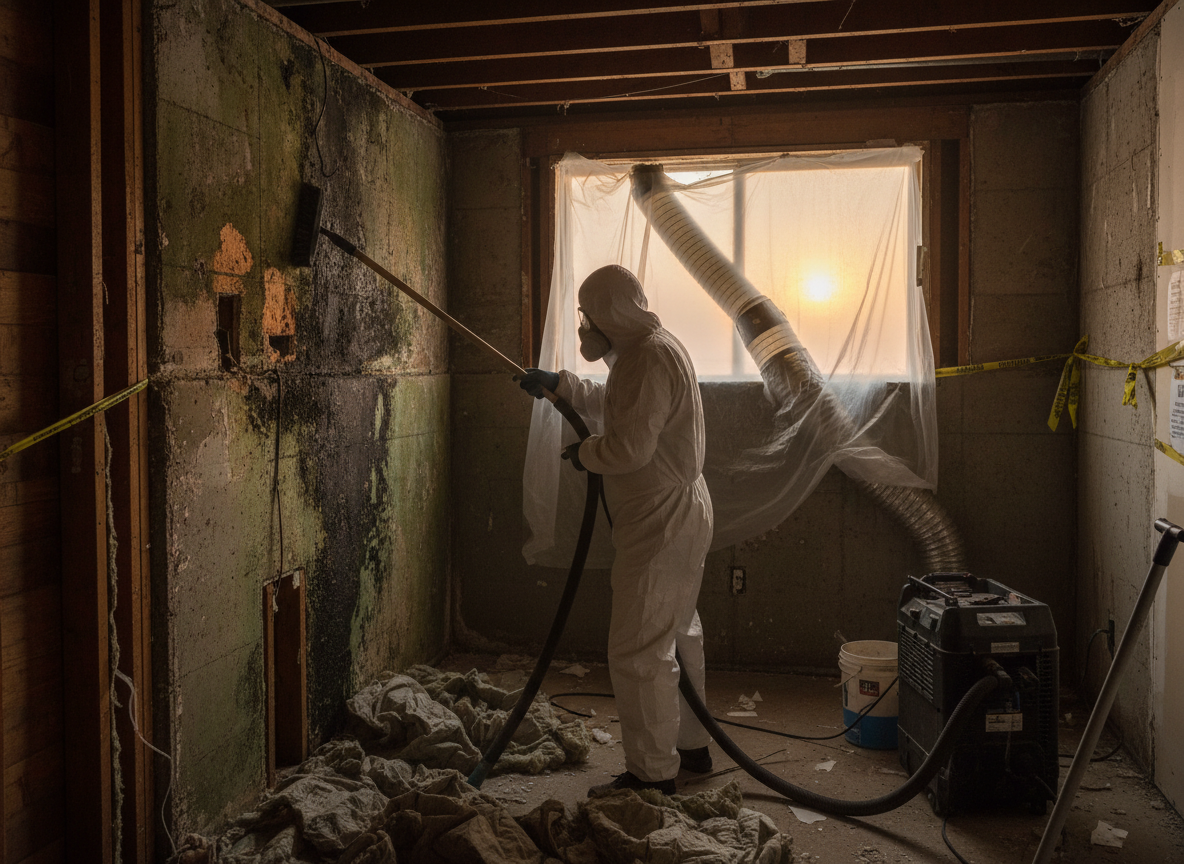
Toxic mold removal in Sunland often starts with hidden growth behind drywall or under flooring in homes built before 1970 in Sunland Village. These properties sit on sloped lots near Foothill Trails where winter rains and mild temperatures allow water to migrate along foundations without obvious surface signs. Crews establish negative air pressure and use HEPA filtration to keep spores from drifting into living spaces while they cut out affected gypsum board and insulation. Los Angeles County building standards require proper disposal of contaminated materials at approved landfills, and any electrical or plumbing work uncovered during removal must meet current codes before walls are closed.
Hot dry summers in Sunland can mask ongoing issues because homeowners assume low humidity prevents mold, yet irrigation near Angeles National Forest trailheads and occasional leaks from aging roof vents keep moisture trapped in attics. Removal crews inspect HVAC systems thoroughly since many Foothill Trails houses use older ductwork that spreads spores when fans run. Containment barriers and antimicrobial treatments are applied only after moisture sources are corrected, and post-remediation air sampling confirms spore counts have returned to normal outdoor levels typical for Los Angeles County.
Sylmar and Tujunga border properties frequently share drainage patterns that funnel water toward Sunland foundations during rare heavy rains. Technicians map these flow paths before starting toxic mold removal to prevent recurrence. Affected wood framing is sanded or replaced only when staining penetrates beyond surface layers, and all work is documented with photos for insurance claims common in this area.
Technician insight
In Sunland, the thing that catches most people out with toxic mold removal is older crawl spaces in Sunland Village homes that sit right at the base of the Angeles National Forest slopes. Winter moisture from the hills pools there even though summers are bone dry, and homeowners keep missing it until the smell reaches the living room.
Foothill Trails Attic Growth
A homeowner in Foothill Trails noticed musty odors after a mild winter. Inspection found water tracking from a roof vent down into insulation over the master bedroom. Crews removed the saturated material, dried the joists, and sealed the vent penetration. Clearance testing passed and the family moved back in without further issues.
How it works
- 1
Initial Assessment
Technician inspects Sunland property for visible and hidden moisture using meters and thermal imaging around foundations and attics.
- 2
Containment Setup
Plastic barriers and negative air machines isolate the work zone to protect adjacent rooms in Sunland Village homes.
- 3
Material Removal
Contaminated drywall, insulation, and trim are cut out and bagged for proper disposal per Los Angeles County rules.
- 4
Drying and Treatment
Dehumidifiers and air scrubbers run until moisture levels stabilize, followed by antimicrobial application on remaining surfaces.
- 5
Clearance Testing
Independent air samples are taken and reviewed before barriers come down and homeowners return to the space.
Pricing
Cost depends on square footage affected, access difficulty in crawl spaces or attics, and whether hidden damage extends into neighboring rooms.