Sunland sits in a Mediterranean climate where hot dry summers push homeowners to close windows tight while mild winters still allow fog and dew to collect inside poorly vented attics. Many homes in Sunland Village and Foothill Trails date from the 1950s through 1970s, with original roof vents and duct runs that trap moisture against insulation and plywood sheathing. When Angeles National Forest trailheads see winter rain, that extra humidity finds its way into ridge vents and bathroom exhaust lines, feeding black mold on joists and inside flex duct.
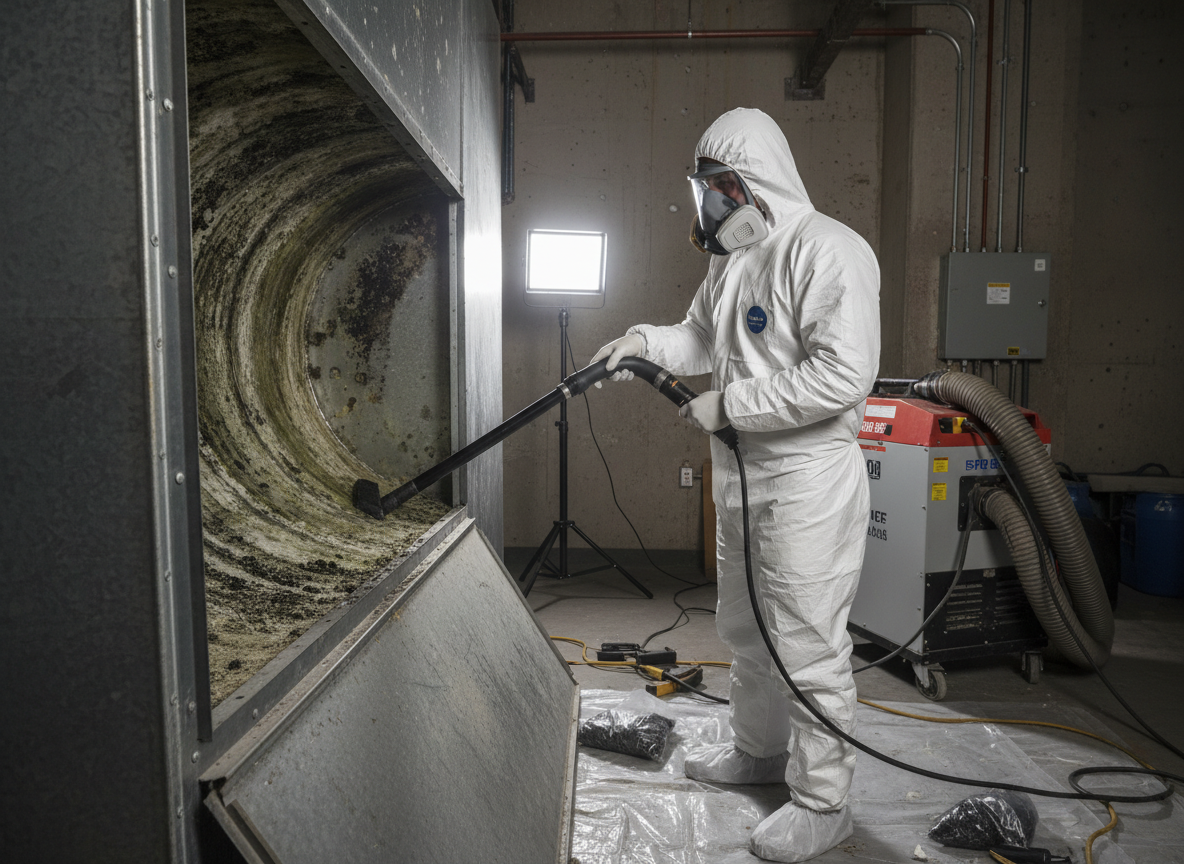
Ventilation mold remediation here starts with isolating the HVAC system so spores do not travel through the house. Technicians remove contaminated insulation, treat joists with EPA-registered antimicrobials safe for wood, and replace sections of ductwork that cannot be cleaned. In Los Angeles County, building codes now require minimum attic ventilation ratios; older Sunland properties often fall short, so crews add ridge vents or powered fans only after confirming the roof structure can handle them without creating new leak points near Sunland Park slopes.
Edge cases appear when mold has reached bathroom exhaust fans that terminate inside the attic instead of through the roof, a common shortcut in Sylmar-adjacent builds. These fans must be disassembled, the housing cleaned, and the termination rerouted to meet current code. Homeowners sometimes attempt bleach sprays on visible spots, but that leaves roots inside porous wood and paper-faced drywall, guaranteeing recurrence once the next winter fog arrives.
Seasonal Guidance
Mold pressure peaks after the first winter rains when daytime highs still reach the 60s but nights drop into the 40s, creating condensation inside uninsulated ducts. Scheduling remediation before summer heat returns allows proper drying without dehumidifier rental in 100-degree attic conditions.
Technician insight
In Sunland, the thing that catches most people out with ventilation mold remediation is the way older Foothill Trails homes built before 1978 have ridge vents that were never sized for the winter fog that rolls in from the Angeles National Forest; homeowners seal the attic to save energy and the trapped moisture sits against the sheathing all season.
Sunland Village Attic Duct Job
A homeowner noticed musty air from the central vents after the first winter rain. Inspection found black growth inside flex duct connected to a bathroom fan that terminated in the attic instead of through the roof. Crews isolated the HVAC, removed the contaminated runs, treated the joists, and rerouted the exhaust to a proper roof termination. Clearance testing passed and the system has stayed dry through the following summer.
How it works
- 1
Inspection and Containment
Technicians arrive at the Foothill Blvd address, seal off the affected attic or crawlspace with plastic sheeting, and use moisture meters plus borescopes to map growth in ducts and vents without disturbing spores.
- 2
Source Removal
Contaminated insulation, duct sections, and affected wood are bagged and removed through exterior access points to avoid dragging debris through living areas in Sunland Village homes.
- 3
Antimicrobial Treatment and Drying
EPA-registered solutions are applied to joists and sheathing; commercial air movers and dehumidifiers run until wood moisture content drops below 12 percent, typically two to three days in the dry summer air.
- 4
Ventilation Upgrade and Clearance
New ridge vents or powered fans are installed where code requires, then independent testing confirms spore counts match outdoor levels before the space is returned to use.
Pricing
Cost depends on square footage of attic or crawlspace, number of duct runs that need replacement, and whether hillside access equipment is required for Foothill Trails properties.